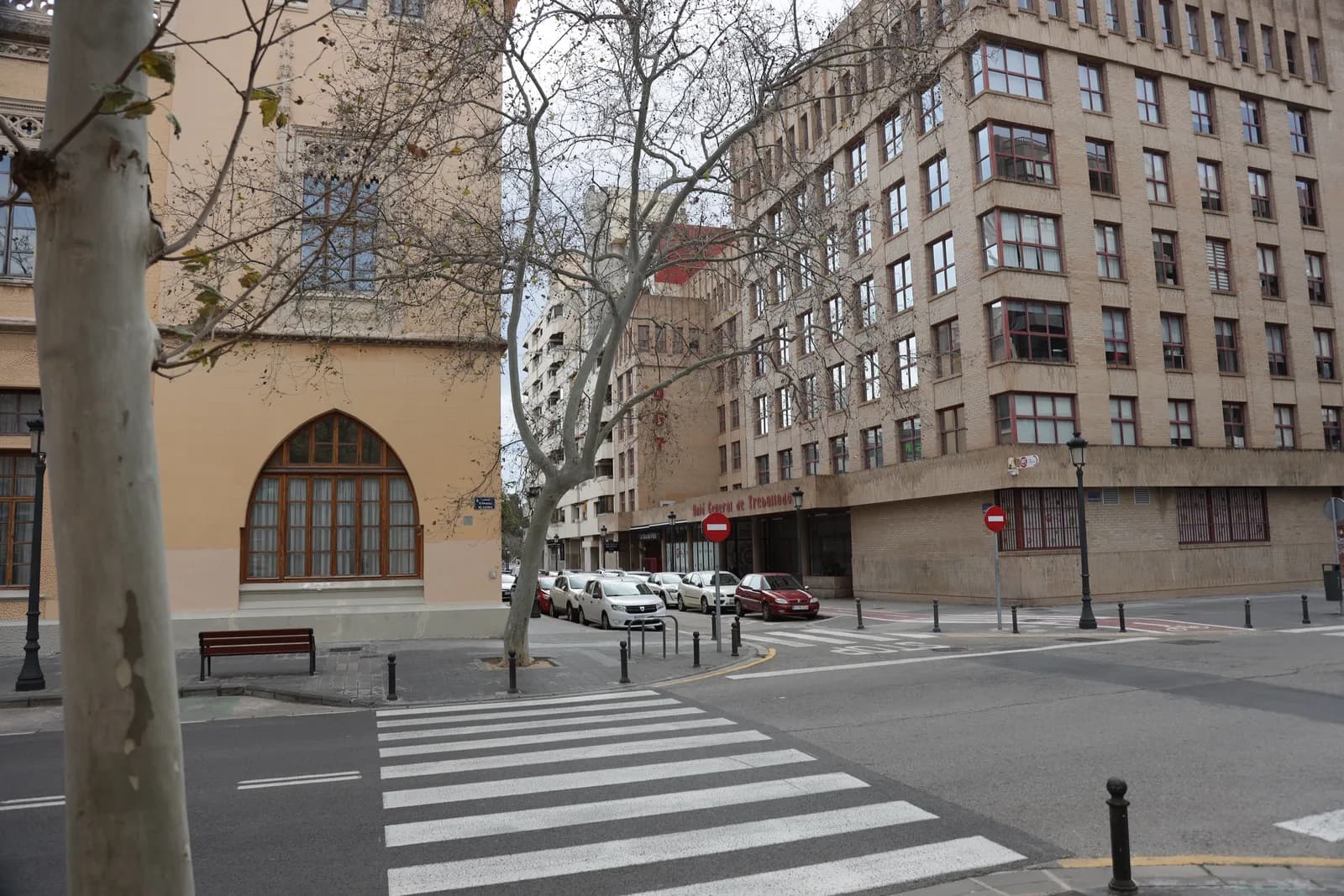
A garden with platforms, not paths
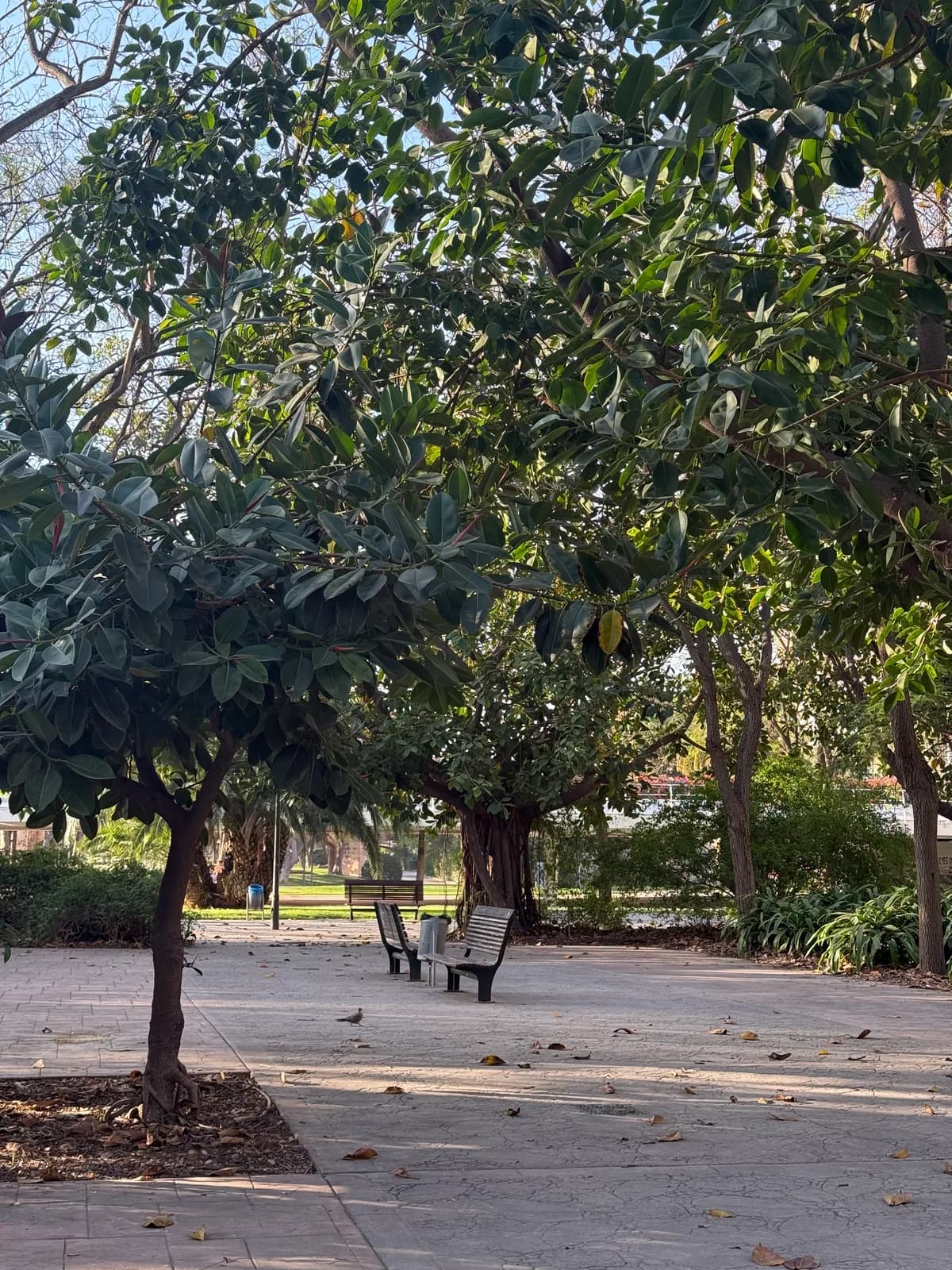
Seventeen trees, including ficus, pines and orange trees, are reportedly due to be removed from the park on the former Jesús ‘trenet’ station site. The number is the starkest part of the reported renovation plan, but the more lasting change may be quieter: a garden that has long been broken into levels is intended to become a place one can cross without meeting a flight of steps.
The reported €300,000 project concerns the green space between Carrer de Carcaixent and Carrer d’Uruguai, near Avinguda de Giorgeta, in Jesús. It would retain the metal canopies from the old platforms while replacing steps between the garden’s areas with slopes of no more than 6%. For somebody pushing a pram, using a wheelchair, carrying shopping or simply trying to take the short way home, that percentage is more meaningful than the language of a “renewal”.
According to the reported project documents, the site has differences in level of up to 40 centimetres. That is not much to look at on a drawing, yet it is enough to divide a modest park into separate rooms: the bench you can see but do not bother reaching, the entrance that works only from one side, the route that sends everyone around the edge.
Accessibility is a daily kind of beauty
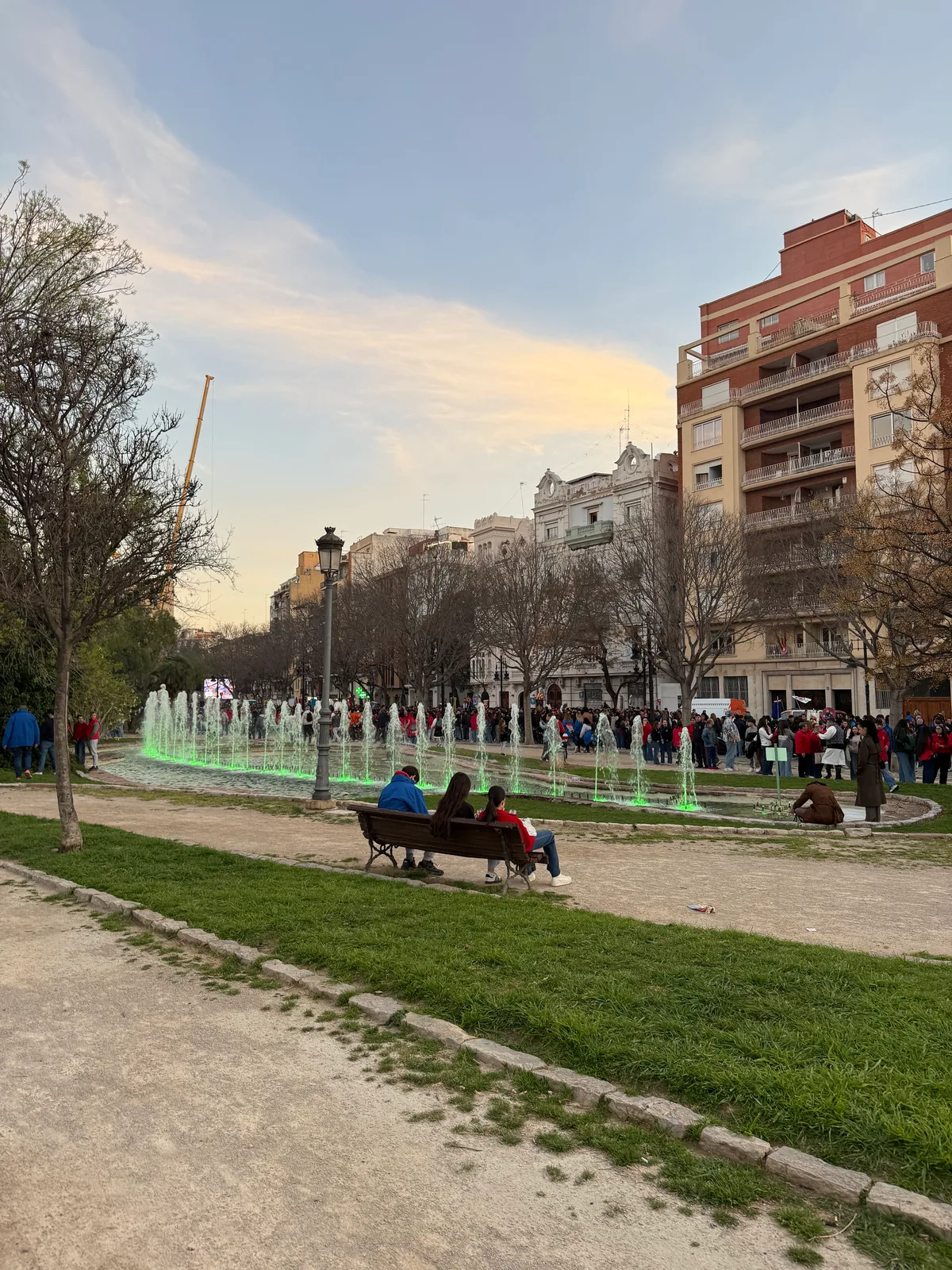
Valencia’s parks are often treated as destinations: somewhere to sit beneath a tree, let children run, or cool down at the end of a hot walk. But the smaller ones also function as passages. A useful neighbourhood garden lets a resident cut across it without studying the paving first; it allows an older neighbour to take the gentlest line, and a visitor to understand where the exit is.
The reported plan describes an intention to open up sightlines where dense planting now closes them off. That can sound like the bureaucratic cousin of landscape design, yet it addresses a very ordinary feeling. In a small enclosed green space, being able to see the next path, a canopy or the street beyond makes the place legible. One does not need a map, or a reason to hurry, to appreciate not being funnelled into a surprise dead end.
There is a trade-off. Shrubs may preserve green cover, as the reported scheme proposes for the areas affected by removals, but they do not provide the same high shade as a mature crown. In Valencia, height matters: it is the difference between planting that decorates a route and planting that makes a route bearable. Any future planting choice will therefore be felt not only in photographs of the finished garden, but at pavement level in the warmer months.
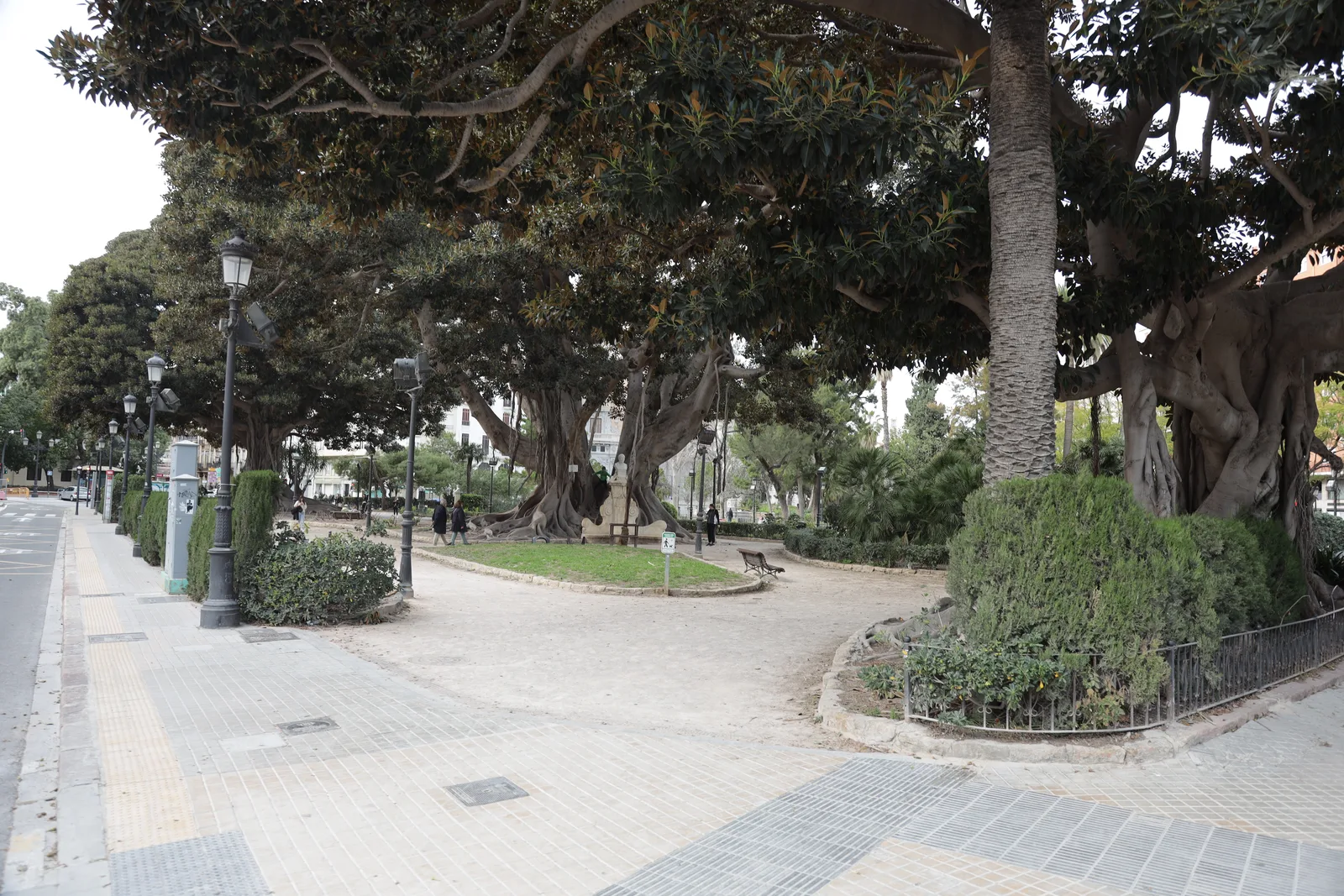
The station is not merely decoration
The metal canopies are reportedly staying. That decision gives the garden something many upgraded public spaces lose in the pursuit of tidiness: a visible reason for being there. The site was once a station for the local narrow-gauge railway, and its platform structures turn an otherwise ordinary wedge of planting into a fragment of the district’s working geography.
Old railway traces can be easy to overlook when they are absorbed by new streets, paving and apartment blocks. A canopy, however, has a practical scale. It tells you where people waited, where a train once arrived, and how a piece of transport infrastructure was later asked to become a public room. Keeping it does not require the garden to become a museum; it simply lets the place retain its own odd silhouette.
That is particularly valuable in a park intended for repeated use rather than a special visit. Children may care more about the play area than an old platform roof; commuters may barely look up. Still, familiar physical markers help a neighbourhood resist the blankness that can follow refurbishment. They give directions a little more texture: meet by the canopy, take the path behind it, wait in the shade. For a broader sense of the area, see our guide to Jesús.
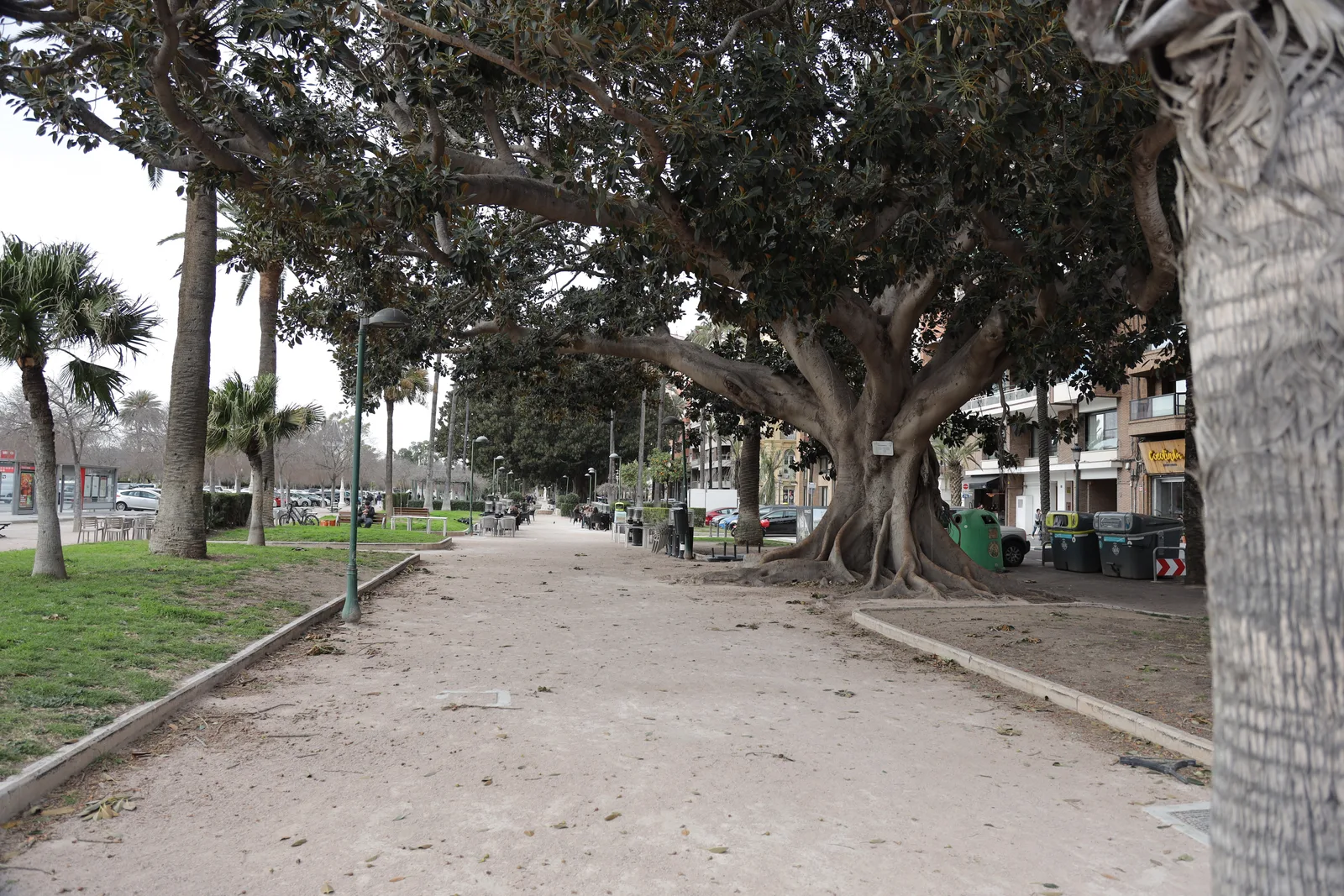
Trees are infrastructure, not simply a count
According to the reported documents, 21 trees would be taken out of the garden’s present arrangement: four would be transplanted elsewhere in Valencia, while 17 would be felled because they were considered unsuitable for transplanting or in poor vegetative condition. The reported list of those 17 includes five orange trees, six ficus, three pines, two trees of love and one tipuana.
Numbers make the change easy to repeat, but they do not settle what people will notice. One tree may be a thin specimen that has ceased to thrive; another may be the piece of shade someone has used for years. The reported rationale is that removing certain trees would help the remaining ones develop better. That may prove persuasive in the garden itself only if the work leaves a place that feels cooler, clearer and more cared for than before.
“no presentan valor patrimonial arbóreo”
The reported assessment uses that phrase—“they do not have heritage tree value”—for some of the trees. It is a technical judgment, and an understandable one in a renovation file. Yet residents tend to read trees differently: by the bench beneath them, the birds in the branches, or the patch of shadow they cast at an inconveniently bright hour. Good public landscaping has to hold both views at once.
What a modest renovation can change
The children’s play area is reportedly to remain where it is because it is considered to be in good condition. That restraint is welcome in principle. A neighbourhood park does not need every element replaced to feel renewed; sometimes the useful intervention is the one that fixes drainage, makes irrigation work, repairs surfaces and leaves the parts people already know alone.
The reported documents describe worn paving, incomplete irrigation, neglected lighting columns and drainage problems, along with compacted ground and vegetation. These are not glamorous failures, but they explain why a park can feel tired even when it is still green. Water that sits after rain, a path that jars underfoot, or lighting that seems forgotten changes whether people linger, pass through or avoid a place after dark.
If the renovation follows the reported outline, the former station garden could become a clearer example of what small public space is for in Valencia: not a postcard garden, but a cool, navigable pause between streets. The best outcome would be one that visitors understand without instruction and neighbours stop noticing because the route, the shade and the old canopies have simply become part of the way home.