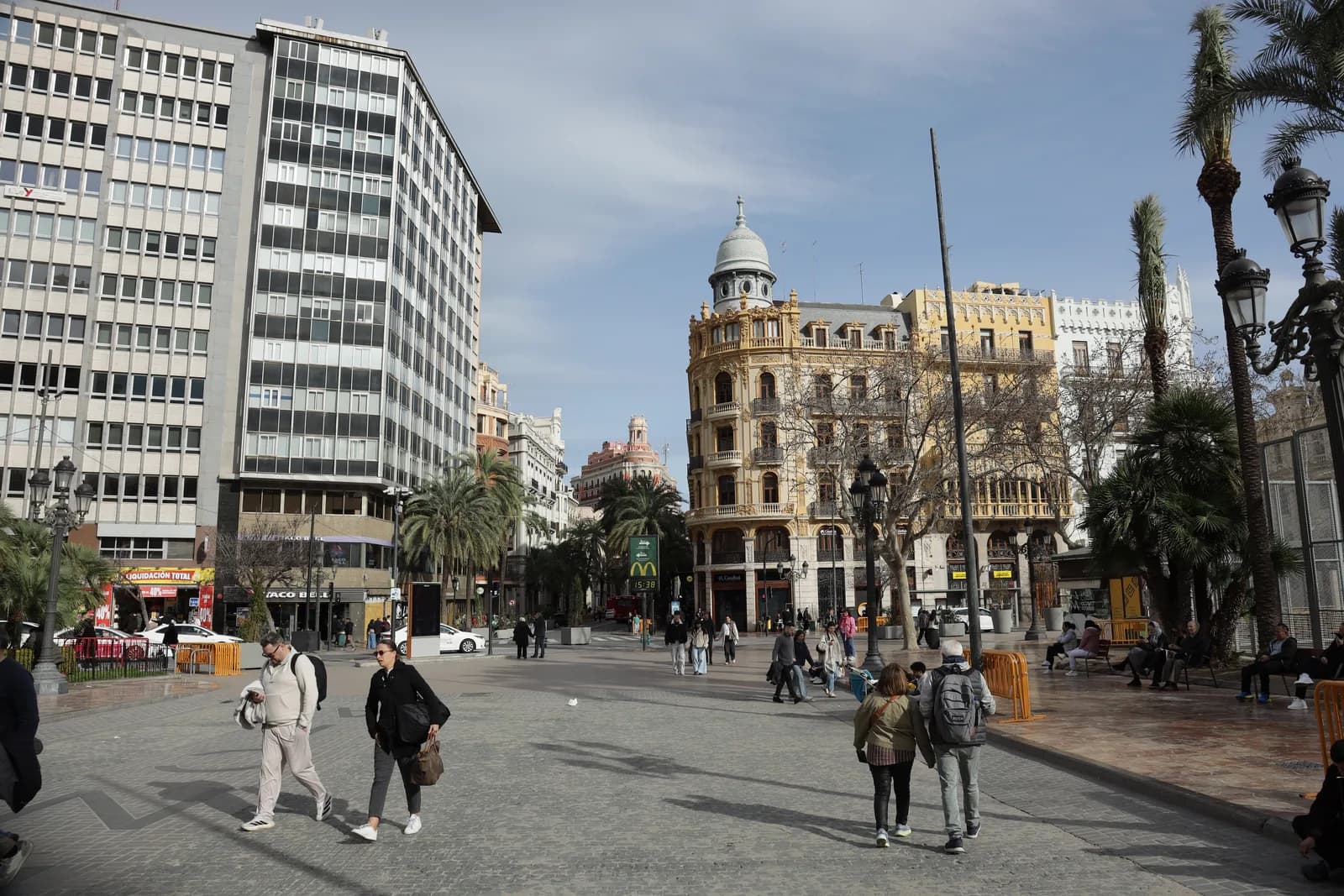
At the edge of Plaza del Ayuntamiento, a waiter can fold a table, stack a chair and clear a whole patch of pavement in minutes; the harder work is making those objects look as though they were always meant to sit beneath the square’s grand façades. A single local report says Valencia has approved a common design framework for the restaurant terraces here, turning a familiar piece of street furniture into a small lesson in how the city presents itself.
The proposal is easy to dismiss as a matter of chairs. Yet Plaza del Ayuntamiento is one of the places where visitors first decide what Valencia feels like, while residents use it as a crossing point, a meeting place and, on a hot afternoon, a practical refuge for a coffee. Its terraces occupy public space in plain view of civic buildings, traffic, pedestrians and celebrations. Nothing placed there is entirely private.
According to the report, the aim is to bring different terrace furnishings into a more coherent visual family while allowing hospitality businesses to continue working. That balance matters more than any one shade of paint. A square that is too tightly controlled can feel like a stage set; one with no shared language can make its finest architecture compete with a jumble of signs, plastics and furniture chosen one premises at a time.
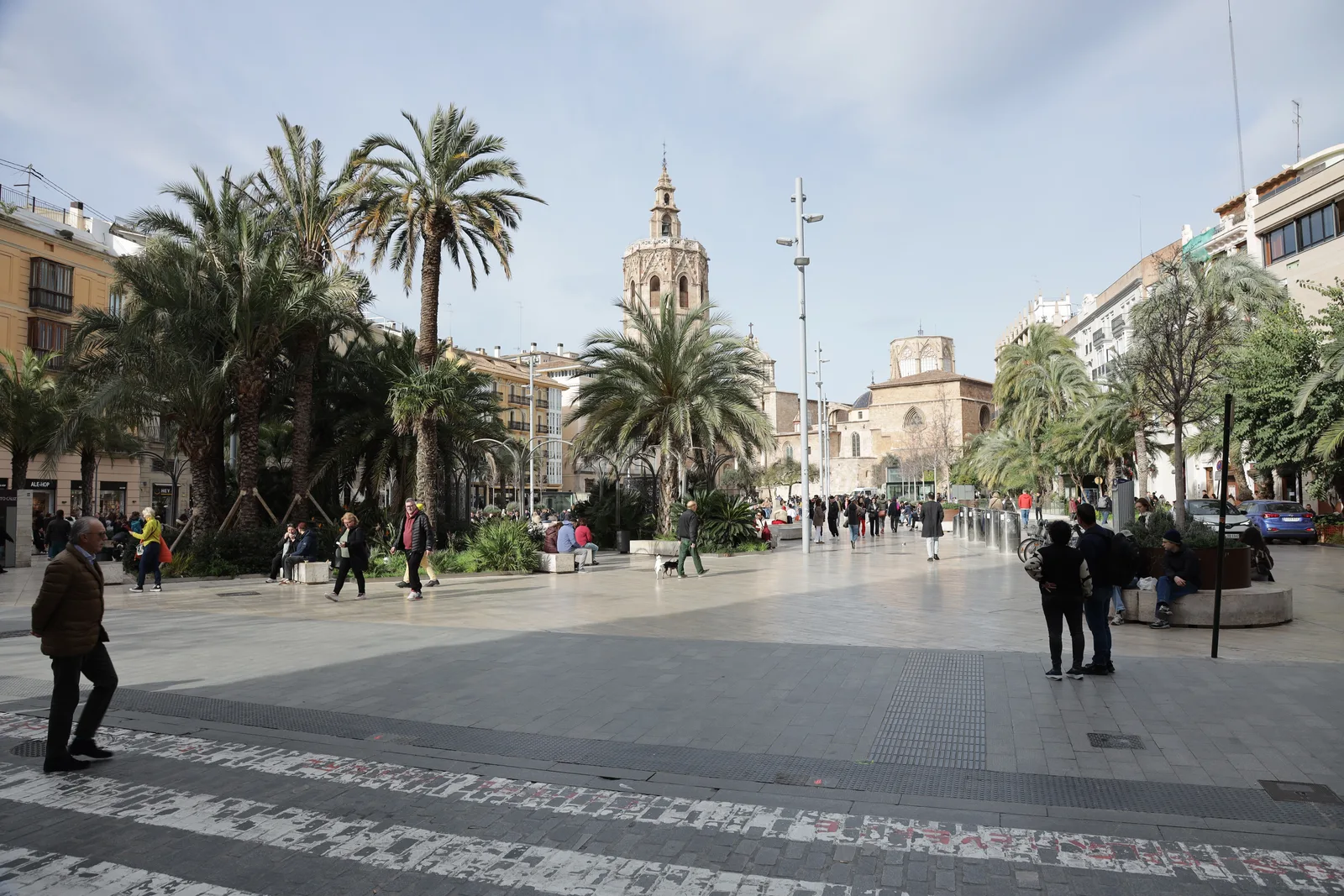
A square is not a dining room
Terraces are among Valencia’s most useful bits of urban infrastructure. They turn a quick breakfast into an hour outdoors, give someone waiting for a bus a place to pause, and make a central square legible at walking speed: look for the occupied tables, the awnings, the glasses catching the light. For newcomers, they are also a gentle way into local rhythms, without the formality of booking a restaurant.
But a terrace in a monumental square does more than serve the people at its tables. It sets the width of a pedestrian passage, changes where a family can stop with a pushchair, and determines whether the eye lands on a building or on an advertising panel. The reported framework treats the furniture as part of the setting rather than as detachable equipment. That is a useful distinction in a city where the pavement often has several jobs at once.
Plaza del Ayuntamiento sits beside the historic centre, but it is not a quiet old square preserved behind glass. It is a working hinge between neighbourhoods, shops and transport routes. A visitor headed towards Ciutat Vella may pass through it without stopping; a resident may cross it twice a day. The best public-space rules leave room for both kinds of use.
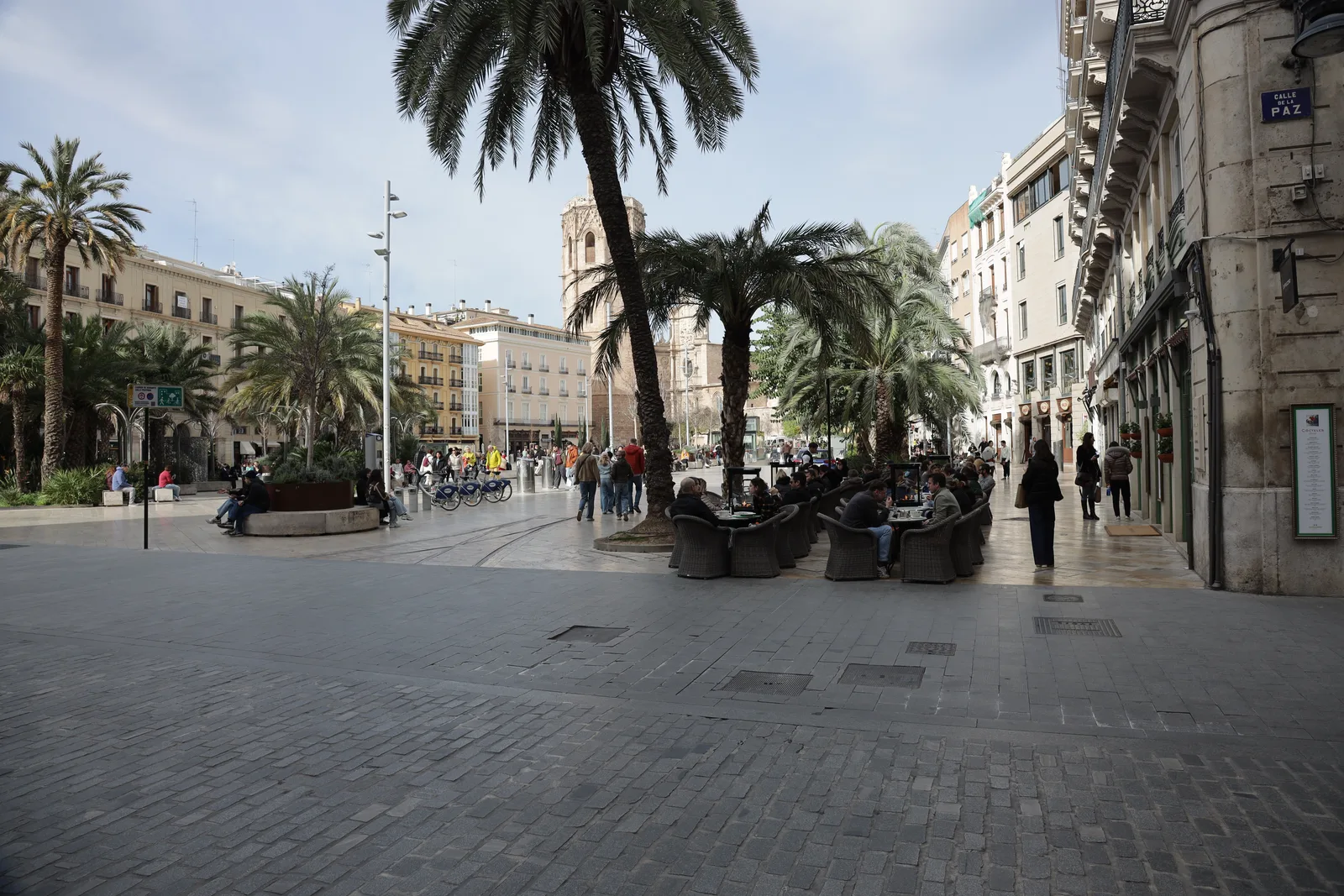
Why the details are so specific
The report describes a deliberately restrained, classic direction: stackable metal chairs with slender lines, in matt graphite black or anthracite grey, with an optional beige outdoor cushion. Tables would use a dark central metal base and an off-white high-resistance top. The choice is reportedly intended to suit the square’s historic and architectural character rather than promote a particular commercial supplier.
That level of prescription can sound fussy until one imagines the alternative. Outdoor furniture has a habit of multiplying visual decisions: glossy colours, bulky frames, logos, mismatched tabletops, cushions that fade at different speeds. A limited palette lets the café activity remain visible without insisting that every table announce itself. In a busy square, visual quiet is not the same thing as emptiness.
The practical specifications matter, too. The reported chairs are meant to be light, stable, suitable for intensive outdoor use and simple to maintain; the tables are meant to fold for storage. These are working objects, not museum pieces. A good design rule for a terrace is one a server can live with during a long shift and a proprietor can replace without having to hunt for a single authorised model.
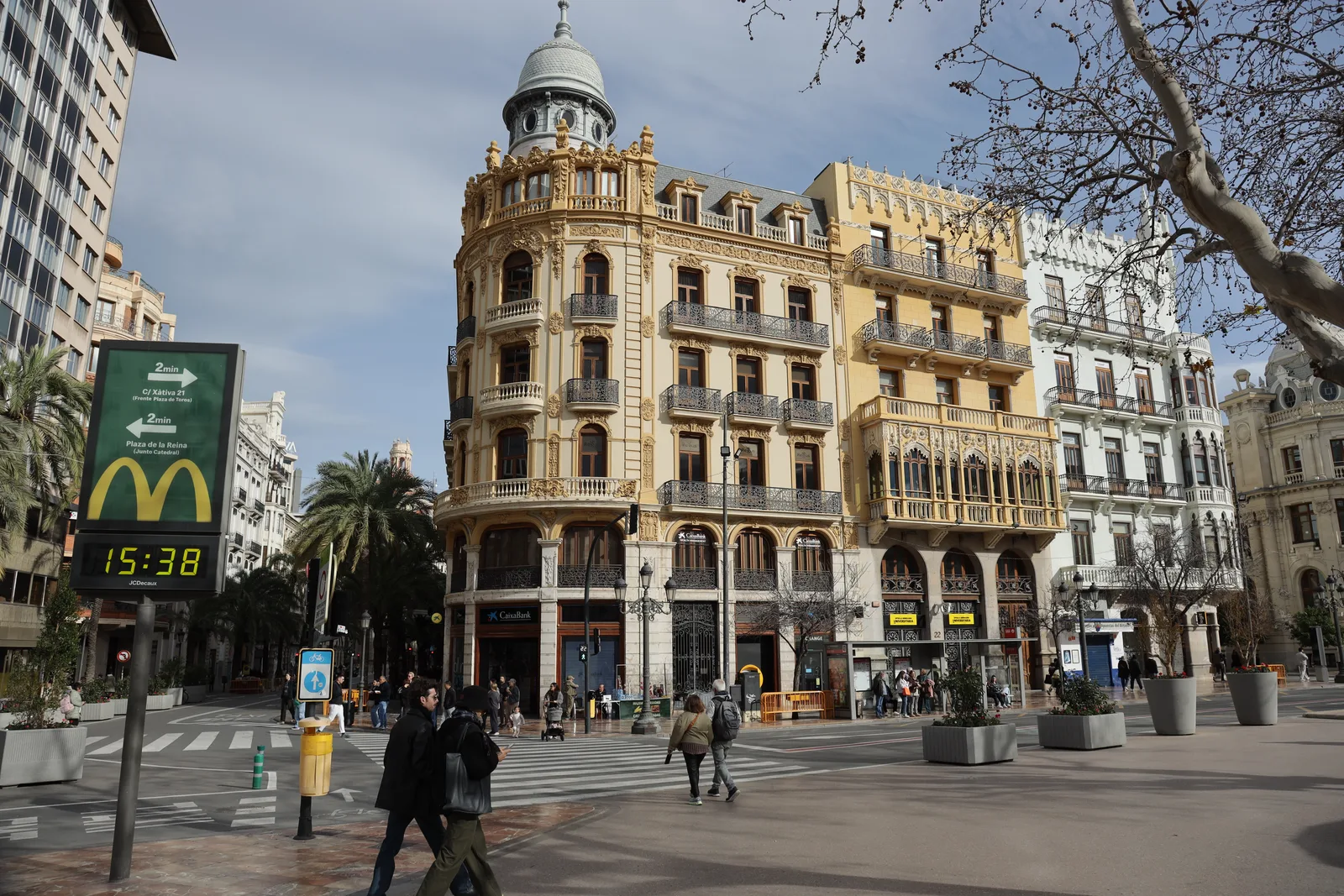
Uniform does not have to mean lifeless
There is a real anxiety behind any attempt to standardise a beloved public place. Café terraces are part of a business’s personality: the way tables are arranged, the pace at which they turn over, the regulars who claim a corner. When the chairs match, the fear is that every frontage begins to resemble the next. The reported plan appears to avoid imposing brands or exact commercial models, leaving businesses some room within the stated technical requirements.
That is where the distinction between a design code and a costume becomes important. A code can settle the things that affect everyone—scale, materials, durability, visual clutter—while allowing the human particulars to remain: a different menu, a familiar waiter, the choice of morning pastry, the local who always orders at the bar. A square gains character from these repeated encounters, not from an unlimited number of chair designs.
The report says the city is considering financial help for affected hospitality operators and that businesses would have a year to renew their furniture once the rules take effect. Both details are significant because aesthetic improvements are never free to the people asked to make them. If public authorities want a more polished shared space, the cost cannot be treated as somebody else’s decorative problem.
What residents and visitors will actually notice
Most people will not measure a seat or identify a powder-coated finish. They may simply notice that the square feels calmer, that the terrace edges read more clearly, or that photographs contain fewer competing objects. That kind of change is almost invisible when it works well. It does not demand admiration; it makes room for the building, the sky and the people using the pavement.
For visitors, the useful habit is to see the terrace as part of the square rather than a barrier in front of it. Choose a table, certainly, but notice what stays open around it: the routes across the plaza, the distance between tables, the view from the chair. For residents, these decisions are a reminder that everyday comfort—somewhere to meet, sit, wait and talk—depends on small negotiations about public ground.
Valencia will keep changing its pavements, terraces and corners because it is a city used in public. The most convincing improvements will be the ones that make room for a busy coffee service, a clear path and an unhurried glance at the square all at once. In that sense, the humble chair is not the end of the story; it is one of the tools by which a city learns to share its best rooms.