By mid-morning, the streets around Estación del Norte are described as full of people moving between stalls, shopfronts and the station’s constant foot traffic. A local account of the Jerusalem market catches a vendor calling out about footwear, while nearby shoppers inspect boots, jewellery, plants and second-hand clothes.
The market is presented as a Tuesday ritual rather than a tidy retail excursion: a place where an Italian visitor looks for something absent from the shops, regulars arrive from outside the city, and fashion-minded buyers hunt branded garments with previous lives. One pair of sisters reportedly found Desigual jackets for five euros.
That anecdote is more revealing than it first sounds. The appeal of a street market is rarely only that things cost less. It is the permission to look without a plan, to hold an odd object for a moment, and to leave with something that cannot be reproduced by typing a product name into a search bar.
A station district built for passing through
According to the account, the market sits close to train and Metro connections, a position that helps explain its unusually mixed crowd. Estación del Norte is not merely a landmark beside the stalls; it is part of the market’s logic. People can arrive carrying the rhythm of a commute, a day trip or an errand, then fold browsing into the journey.
For visitors, that makes the area an approachable first encounter with everyday Valencia: less polished than a department store and less curated than a vintage boutique. For residents, it offers the opposite pleasure. The familiar station quarter can still produce a surprise, provided there is time to slow down and notice the tables at street level.
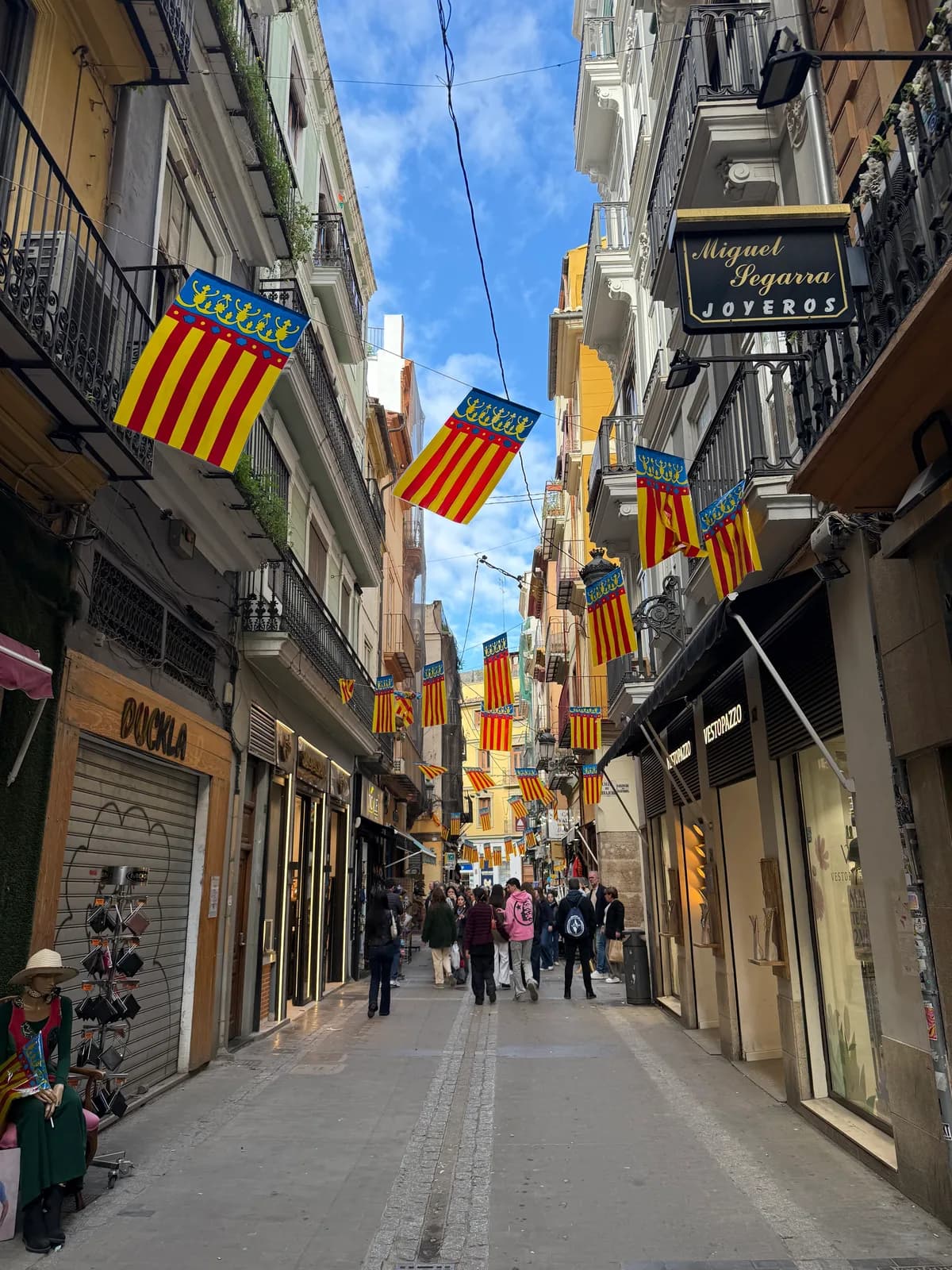
The account calls the surrounding neighbourhood multicultural and notes businesses run by people from eastern backgrounds. It also places the area in the overlapping worlds of Fallas and Chinese New Year. Those descriptions point to a useful way of reading central Valencia: districts are not single-theme destinations, even when a guidebook tries to make them so.
The bargain is only part of the exchange
One seller is reported to say that some well-dressed shoppers want to buy “demasiado barato” — too cheaply. It is a familiar friction in markets everywhere: the customer sees a lucky discovery; the person behind the stall sees stock selected, carried, displayed and sold one conversation at a time.
That tension is worth keeping in mind when the prize is a branded second-hand jacket or a pair of on-trend cowboy boots. A low price can be part of the pleasure, but so can recognising the work and knowledge that make a stall possible. The market’s character depends on sellers being able to return week after week, not only on buyers extracting the lowest imaginable price.
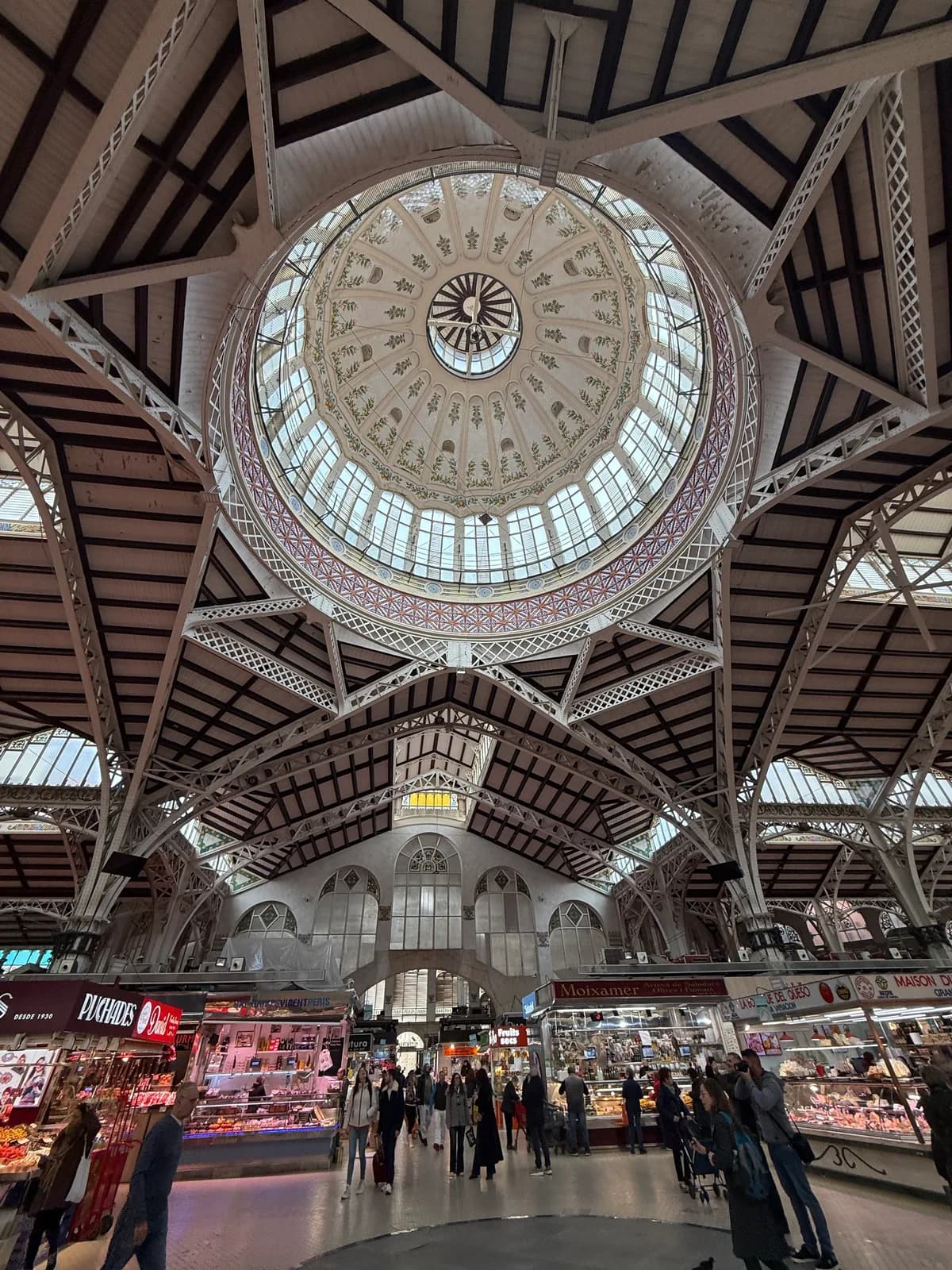
The reported range is broad: haberdashery, make-up, sweets, rings, necklaces, bracelets, indoor footwear, new clothing and vintage pieces. Such mixtures can look chaotic to a first-time visitor. They are also what distinguish a street market from a specialised shop: domestic necessity, small indulgence and accidental style occupy the same few blocks.
What people carry into a market
A regular named Amelia is reported to travel from Silla by train, continuing a habit she shared with her mother. Her visit includes lunch and coffee with friends, according to the account. That turns a purchase into an excuse for an outing, and an outing into something that can be inherited.
“Con mi madre ya venía.”
Markets endure partly because they are good at this sort of layering. Someone may come for a plant and end up trying on a coat; another may arrive for a particular household item and stay for a conversation. The source describes shoppers who return not only for goods but for the social pause around a bar table.
For a newcomer to Valencia, this is a useful distinction. A market is not necessarily the city’s cheapest answer to every need, nor a guaranteed source of treasure. It is a public habit: a place where looking, chatting, eating and travelling across town are allowed to take the same morning.
How to browse without flattening the place
The Jerusalem market is reportedly regarded by one long-standing vendor as the “cathedral of markets,” a personal judgement rather than a measurable title. His confidence seems to come from the central location, transport links and passing visitors. Grand labels aside, its value lies in its scale of encounter: sellers and shoppers can still speak directly across a table.
Visitors who explore the streets around the station should expect an ordinary working city rather than a staged attraction. The best approach is to make room for the small details: the call of a trader, the practical item that suddenly seems indispensable, the difference between a real vintage find and a garment merely old enough to be labelled one.
Valencia offers plenty of places designed to be photographed. Its more durable pleasures are often designed to be used: stations, pavements, cafés and markets where different reasons for being there briefly share the same space. For more ways to understand the city district by district, browse our Valencia neighbourhood guide.